
What’s inside Triage Your Inbox — and why it’s structured this way
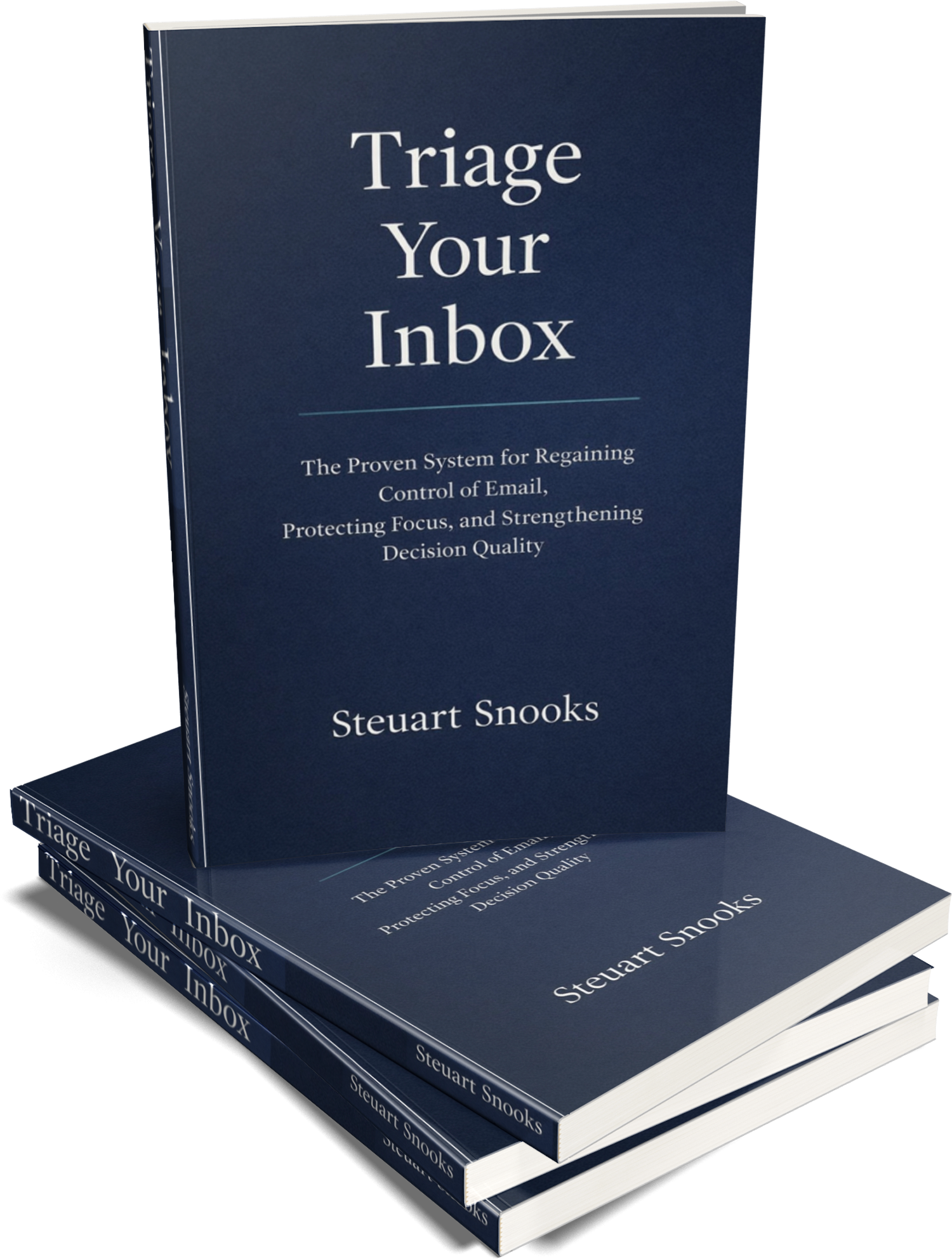
Over the past 30 years, I've worked with thousands of professionals who all share the same challenge — too much email and not enough time. Through my speaking, training and coaching, I've seen firsthand the impact that ineffective email habits can have on productivity, focus and the ability to get meaningful work done.
Triage Your Inbox brings together the practical strategies and systems I've developed over many years of helping executives, assistants and teams take control of their inboxes and transform the way they work.
A lot of business books bury the most important content in the middle, pad the early chapters with research, and leave readers wondering when the practical guidance is actually going to start. Triage Your Inbox is structured differently. Every chapter earns its place. And the sequence matters — because understanding why you are overwhelmed is essential preparation for understanding how to fix it.
Here is what is inside the book, and why each part is designed the way it is.
Part I — The Problem With Email
Most email productivity advice skips straight to solutions. I think that is a mistake. If you do not understand precisely why your inbox behaves the way it does — and why every fix you have tried has failed — you will not trust the solution enough to implement it fully. Part I is not designed to make you feel bad. It is designed to make you feel understood. And if you have ever found yourself re-reading the same email for the fourth time, working through lunch to clear the backlog, or checking email on holiday “just to stay on top of things” — you will.
Chapter 1: The Inbox Trap: Why We’re Drowning - Why email overwhelm is not a volume problem. The standardisation gap no one talks about. The three categories of inbox failure — and the real cost of getting this wrong.
Chapter 2: The Cognitive Cost: What Overload Is Really Doing to You - How open loops consume working memory. Why interruptions cost 23 minutes of recovery time per incident. Pseudo ADD, the Email Capability Pyramid, and the neuroscience of inbox-driven anxiety.
Chapter 3: Why Every Inbox Fix You’ve Tried Has Failed - The folder fallacy. The speed myth. The notification trap. Why good intentions and better tools are not enough without a change in process.
Part II — The Triage Operating System
This is the heart of the book. Part II delivers the complete Triage Operating System — a structured, repeatable, platform-agnostic process that changes how you make decisions about email, how you track commitments, and how you protect your ability to think.
The system has three layers. Part II covers the first two: decision discipline and single-touch processing.
Chapter 4: What Triage Really Means: A Decision Discipline - Where the word triage comes from — and why it is the right mental model for inbox management. The shift from organising to deciding.
Chapter 5: The 4D Framework: Four Decisions That Clear Everything - Delete. Deal. Delegate. Decide. How one simple framework, applied consistently, closes every loop and empties any inbox. The decision tree, the common failure points, and how to make it stick.
Chapter 6: Single-Touch Discipline and the Power of the First Touch - Why re-reading is the enemy of productivity. The elite athlete analogy: starting the day in the calendar, not the inbox. How to build the habit of deciding on first contact — every time.
Part III — From Personal System to Organisational Leverage
A system that only one person uses is only half a solution. Part III is for those who want to extend what they have learned — to the executive–assistant partnership, to team standards, and to the 30-day implementation roadmap that turns insight into lasting capability.
Chapter 7: The Executive Advantage: Riverbank, Chauffeur, and Decision Summaries - How the Executive/EA relationship transforms when both parties use the same system. The Riverbank and Chauffeur models. Decision summaries: replacing thread forwarding with structured briefings.
Chapter 8: Building It to Last: People, Platform, and Process - Why most productivity initiatives fail within six weeks. The PPP Model: how people, platform, and process must all align for email to become reliable organisational infrastructure.
Chapter 9: The 30-Day Roadmap: From Chaos to Capability - A concrete, week-by-week implementation plan. Stabilise. Standardise. Leverage. Embed. How to build lasting consistency without demanding perfection.
A Book for Anyone who Manages Email
Triage Your Inbox was written for executives, managers, executive assistants, team leaders, and anyone who spends a significant portion of their working day in their inbox. It is not platform-specific. It is not industry-specific. It is process-specific — because the process is what has always been missing.
“What you learn could change the way you work … forever.”
Want to Be Among the First to get a Copy?
If this preview has sparked your interest, we'd love to keep you updated. Register your interest to receive book launch news, exclusive pre-release updates, and be among the first to know when Triage Your Inbox becomes available.