The Room Went Quiet — And One Answer Said It All
At both recent ThinkTank EA Summits, after explaining why capturing a next action matters for every email that can't be actioned immediately, I put it to the test. I asked my audience of EAs to consider a real email sitting in their inbox right now, and type the next action for it — starting with a verb.
The first answer took a while to appear on the screen. I waited for the next one, expecting what I thought would be a steady stream of short, practical sentences — "call," "forward," "confirm," "schedule." That's what "next action thinking" is supposed to produce, after all.
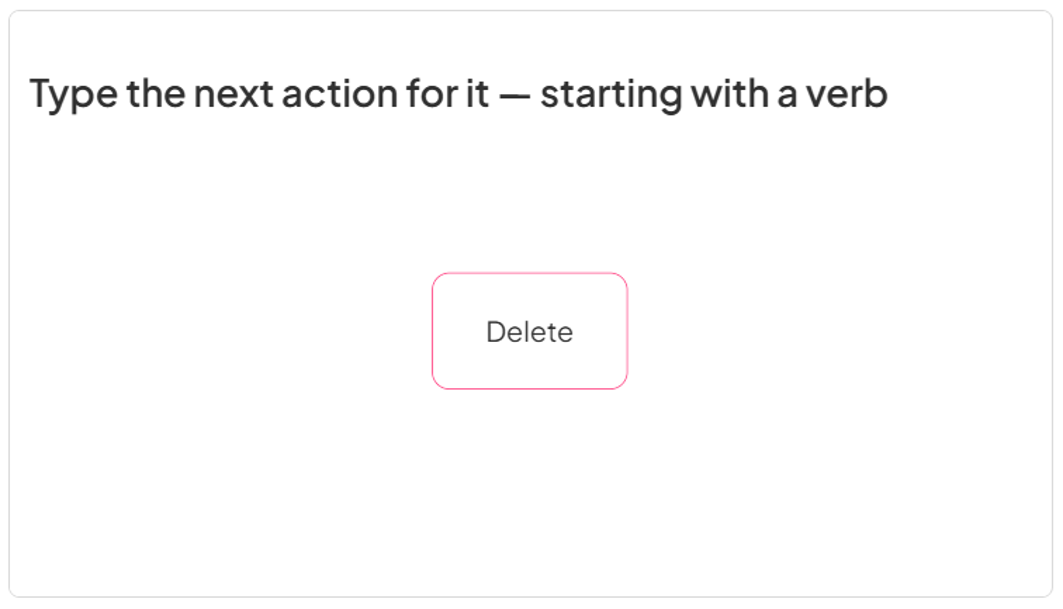
But there was only one single answer from a room of nearly 300 EAs (shown on the screenshot below):
Delete
I stood there for a moment, running through the possibilities. Maybe I hadn't framed the question properly? Maybe people couldn't easily access or recall a genuinely current email while sitting in the conference room? Maybe there simply wasn't a better answer than this one, offered by someone brave enough to type it where everyone could see?
Looking back now, maybe that one single answer says it all.
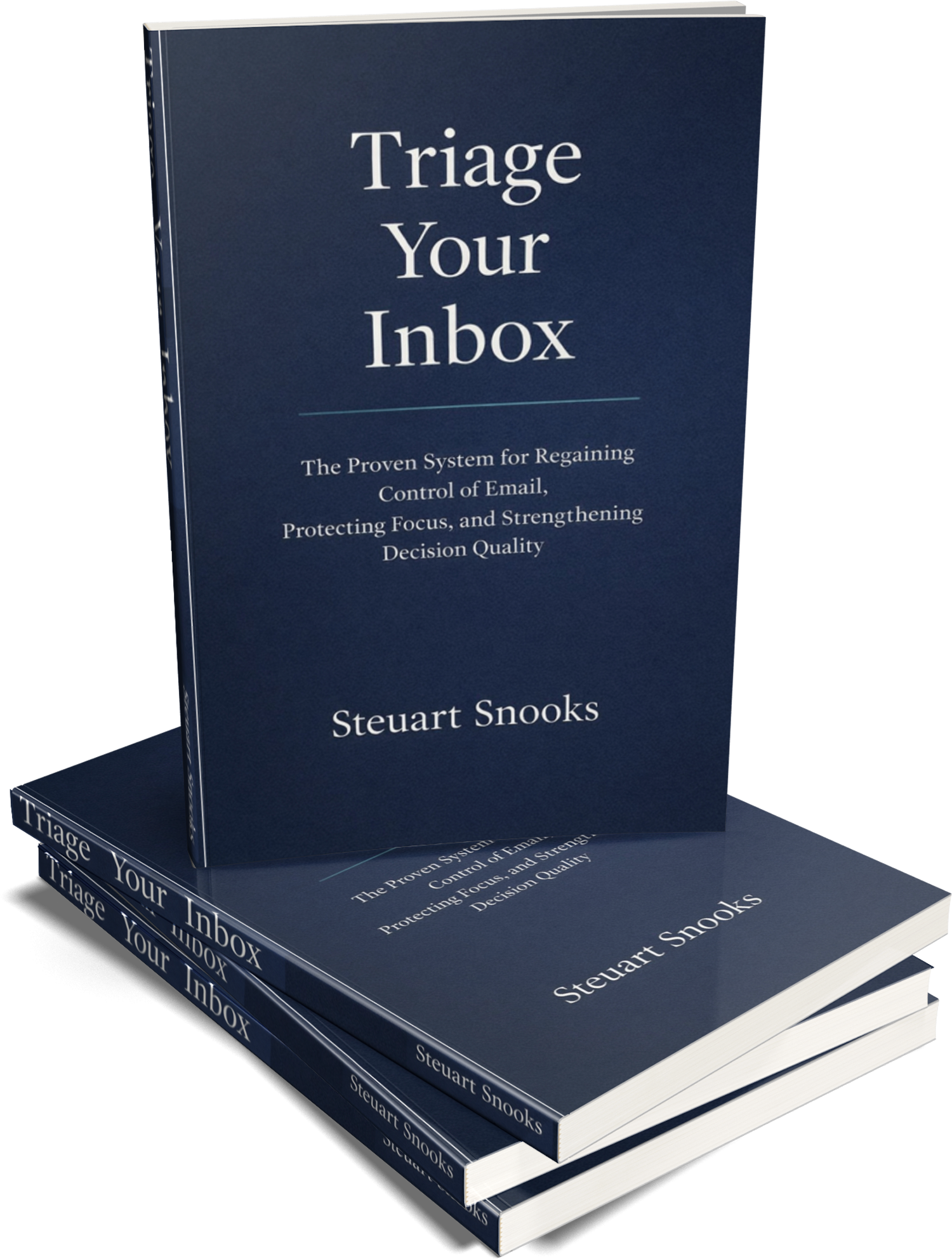
In my new book ‘Triage Your Inbox’, I describe the second of the three failures that create inbox dysfunction as a failure of "what." Even when professionals give an email their attention, they often read without clarifying what needs to happen next. They scan it, register its general nature, form a vague intention to "deal with it later," and move on. No next action is captured. No decision is made. The email stays open in both the inbox and the mind.
“The email stays open in both the inbox and the mind.”
What that room showed me, in real time, wasn't a failure to understand the concept. Everyone in that room could explain next-action thinking back to me perfectly well minutes after I'd taught it. What it showed me was how rarely that thinking gets applied — because doing it live, on the spot, against a real email, is a completely different exercise from nodding along to a slide and explanation.
And maybe "Delete" is the most honest answer of all. If, after everything we've discussed about triage, about the 4D framework, about clarifying next actions — the only thing nearly 300 experienced EAs could confidently type about an actual email in their actual inbox was delete it — that tells you something important. Not that these are ineffective professionals. Far from it. It tells you that most inboxes are so full of noise, so many messages that never needed to exist in the first place, that "get rid of it" is often genuinely the correct next action — and yet it's still one most of us hesitate to take, and rarely take often enough.
Email feels like information, and deleting information feels risky. But Delete is a decision. It closes the loop. It's one of exactly four choices in the framework precisely because so much of what sits in an inbox deserves nothing more than that. The room's silence wasn't a failure to learn the lesson. It may have been the lesson, demonstrated in real time — that recognising what actually deserves your attention, and being willing to let the rest go, is harder in practice than it sounds in a presentation.
Ready to Put the Structure in Place?
Register Your Interest in the ‘Triage Your Inbox’ Book
If you are interested in being one of the first to receive a copy of my new book ‘Triage Your Inbox’, please click below to register.
Learn More About Triage Your Inbox Programs
If you’ve recognised some of these challenges in the way you manage email, the next step is to put a structure in place that works.
Triage Your Inbox provides a practical framework for deciding when to process email, what to do with each message, and where to keep the commitments that matter.
Find out how you can move from simply managing your inbox to being genuinely in control of it.