Inbox Debt and the Power of "Decide"
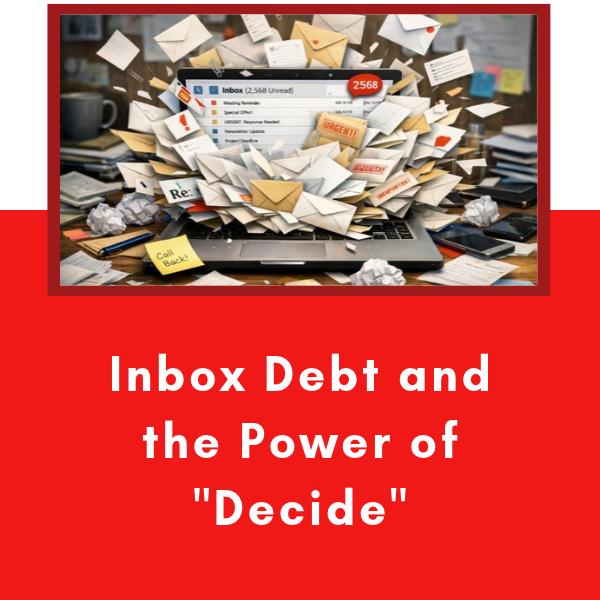
There's a concept I keep coming back to when I talk to clients about email: ‘‘inbox debt’’.
You already know what financial debt feels like. It sits quietly in the back of your mind, whether you're thinking about it or not.
Inbox debt works the same way.
It's every email you've opened but not answered. Every message you've read twice, hoping it'll answer itself the third time. Every "I'll deal with this later" that's been sitting there for three weeks.
I call these ‘open loops’ and your brain doesn't distinguish between an open loop that's urgent and one that's trivial. It just knows something's unresolved, and it keeps a small tab open for it. Multiply that by the 50, 100, or 500 emails sitting in your inbox right now, and you've got a serious amount of ’cognitive weight’ - mental bandwidth you can't get back until something's decided.
That's why the fastest way to feel on top of things isn't a better filing system. It's closing loops.
The 4D Decision Tree
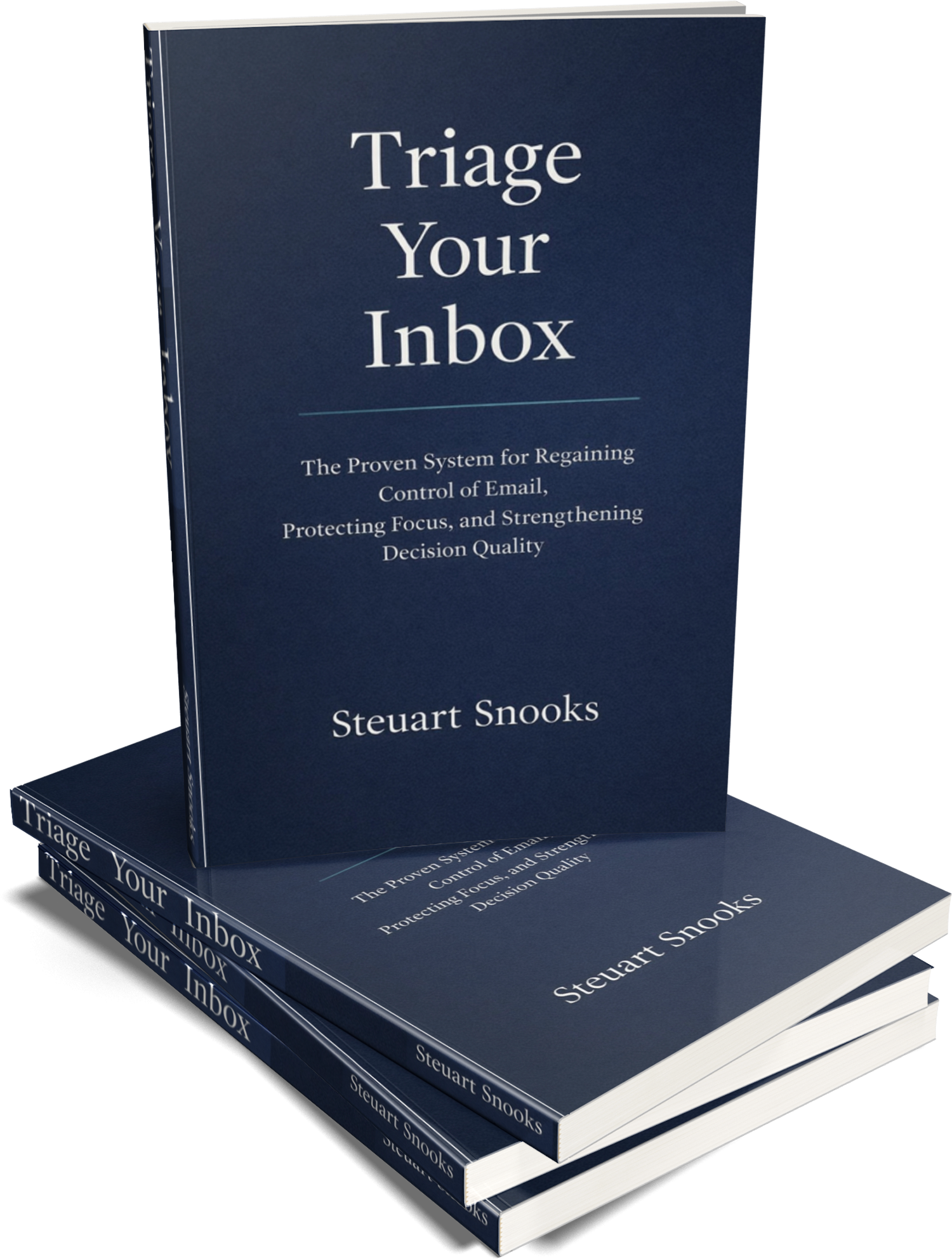
In ‘Triage Your Inbox’, I call this the ‘‘4D Decision Tree’’ - Delete, Deal, Delegate, Decide. It's deliberately simple, because when you're staring down a full inbox, complexity is the enemy.
The first three Ds are for what you can dispatch on the spot: bin it, do it in under two minutes, or hand it to someone else. But most emails don't fall that neatly. So the fourth D - ‘‘Decide’’ - is where the real relief lives.
Decide Is Not Defer
Decide isn't "defer." Defer keeps the loop open. Decide closes it.
When you don't have the time, energy or resources to action an email the moment you read it, Decide means capturing three things: what the next action is, when it will happen, and where that commitment will live until then - in a Triage View built into your own email software, not floating loose in your head or buried in an inbox that keeps scrolling past it.
That's what closes the loop. Not urgency, not more willpower - just knowing exactly ‘what’ you need, ‘where’ you need it, and that it'll come back to you ‘when’ you need it. The moment that's captured, your brain releases it. The mental RAM frees up. And that's the space where better focus, clearer thinking and sharper decisions actually happen.
Maybe the goal isn't to get better at managing email. Maybe it's simply to close more loops than you open - so your mind is free to do the work that actually matters.
Want to know more?
This idea is explored in more depth in my new book, ‘Triage Your Inbox’. Find out more about what's inside it and why it's structured this way, starting with the podcast I did recently with Chris Ashmore Media, and then register your interest in being one of the first to receive a copy of my book.